O`Connell, 1919. The Schrammen Collection of Cretaceous Silicispongiae in the American Museum of Natural History
tags: schrammen, porifera, amnh, silicispongiae
Read online
»back to the first page (Click here if you got a blank screen)
Abstract
Bohemia
In 1840 August Emanuel von Reuss began his elaborate work which appeared under the title of 'Geognostische Skizzen aus Böhmen' (1840-1844), on the stratigraphy of the Bohemian Mittlegebirge in the neighborhood of Teplitz and Bilin. This was followed in 1845-1846 by a volume on the palheontology entitled 'Die Versteinerungen der böhmischen Kreideformation.' In this he described forty-three species of sponges but, like other Germans at that time, he followed Goldfuss in dwelling only upon external characteristics and his illustrations, though carefully drawn, show only the outer form of the sponges.
In 1869 the Natural History Survey of Bohemia was inaugurated and there appeared at Prague the first volume of the 'Archiv fiur die naturwissenschaftliche Landesdurchforschung von Böhmen' containing the exhaustive 'Studien im Gebiete der böhmischen Kreide-Formation.' Johann Krejci (1869) wrote the general stratigraphic section, establishing the geologic succession and giving many detailed vertical and columnar sections, while Anton Fric' undertook the palaeontological investigations of the individual formations of the Cretaceous, and for forty years there have been appearing in the archives of the Bohemian survey monographs by the latter, these being completed in 1911 with a total of nearly a thousand pages. During this period he brought together, in connection with his studies, a marvellous collection of the Cretaceous fauna and flora of Bohemia, which is to be found in the Barrande Museum (Barrandeum) at Prague of which Fric was curator until his death two or three years ago. The stratigraphy and palaeontology have been treated with equal care and with a detail so great that it is highly improbable that future workers will need to make changes of more than minor significance. While the sponge fauna was found to have many species in common with that of northwest Germany, there was also revealed a large proportion of wholly provincial forms which, so far, seem not to have occurred elsewhere. Fric did not essay the complete description of the entire sponge fauna but turned the monographing of it over to his pupil Philipp Pocta, in accordance with the general plan of the Natural History Survey to have complete faunal studies made for each phylum.
In Pocta's 'Beitrage zur Kenntniss der Spongien der böhmischen Kreideformation,' which appeared in three parts in 1883 and 1884, we find the one standard reference work for the Cretaceous sponges of Bohemia, corresponding to Hinde's 'Catalogue' in England and to Rauff's Paloeospongiologie' for the German Paleozoic and Schrammen's 'Kieselspongien' for the German Cretaceous. Zittel's classification and method are followed and the book will be found to be of especial value in containing the most complete synonymies for the species described that have appeared in any one treatise.
Additional species of sponges have been described from time to time in late years as new discoveries have been made, while already known species have been found in new localities. The more important recent writers are Cenek Zahalka (1885, 1886a, 1886b, 1887a, 1887b, 1888), Jaroslav Jahn (1891), Bfetislav Zahalka (1912a, 1912b, 1913), and Scupin (1907). Cenek Zahalka wrote only short papers discussing previously named species or calling attention to new occurrences, his work being very local in character and confined mostly to the Cretaceous around Roudnice (German Raudnitz). Many of his papers are short contributions, written in Bohemian and thus rather inaccessible. The stratigraphy of the Cretaceous around Prague has been worked out in the utmost detail by Bretislav Zahalka (1912a, 1912b, 1913, papers in Bohemian), who has not, however, paid much attention to the faunas, merely mentioning species in the text and listing them in summary tables.
[...]
Pictures from the publication
no pictures available
TaxonFinder
Taxonomic ranks shown on mouse-hover may differ from the taxonomic alignment in the publication. Because of the multiple appearances of genera in different taxonomic kingdoms (e.g. Siphonia is a genus in Protozoa→Granuloreticulosea and Animalia→Demospongea) you should verify the taxon (its rank) with the publications description or the link to the Paleobiology Database. Additionally, due to the lack of data at the source "Catalog of Life" perhaps no further data for an extinct taxon is provided here at all.
Related content
-
Schrammen, 1924. Die Kieselspongien der oberen Kreide von Nordwestdeutschland. III


-
Schrammen, 1912. Die Kieselspongien der oberen Kreide von Nordwestdeutschland. II. Teil: Triaxonia (Hexactinellida)


-
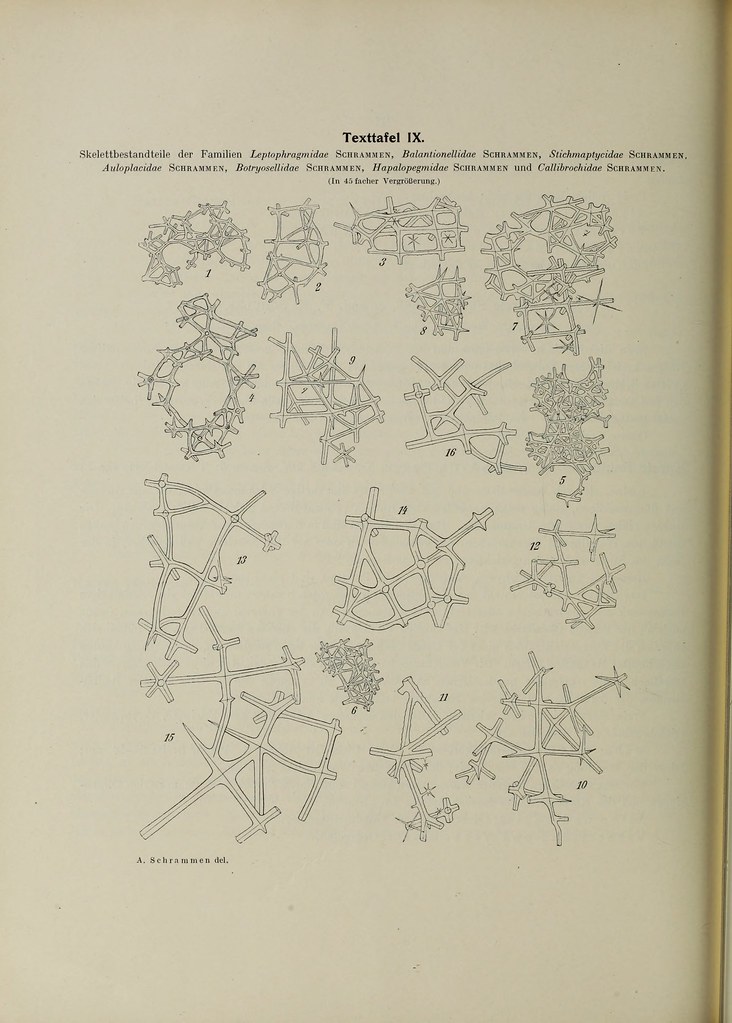
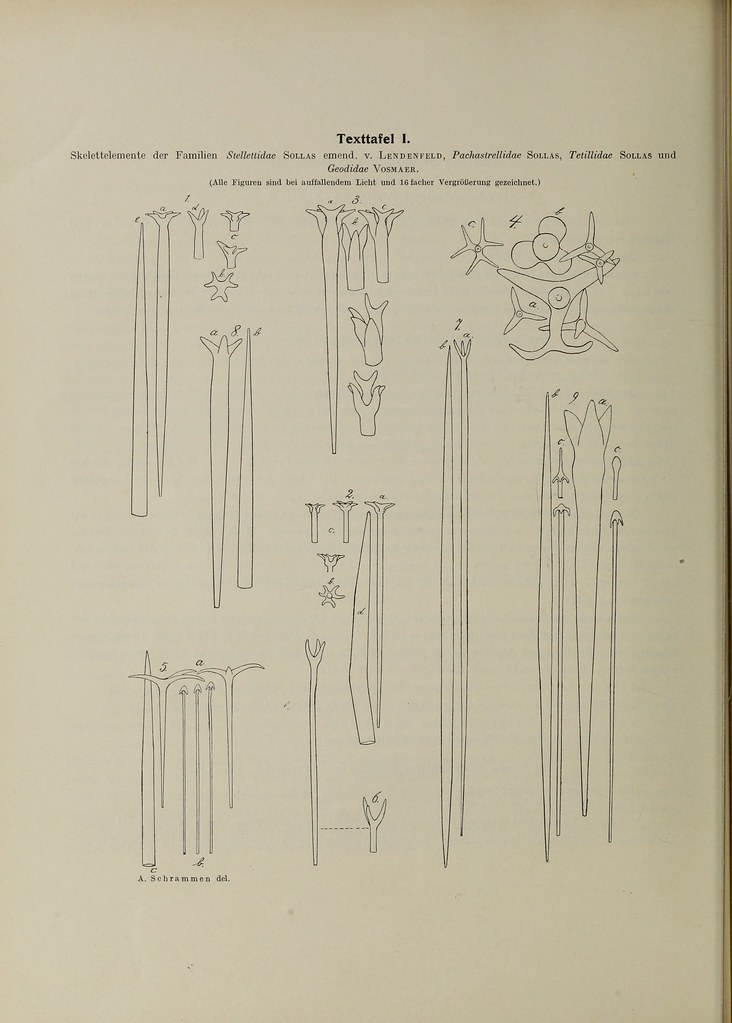
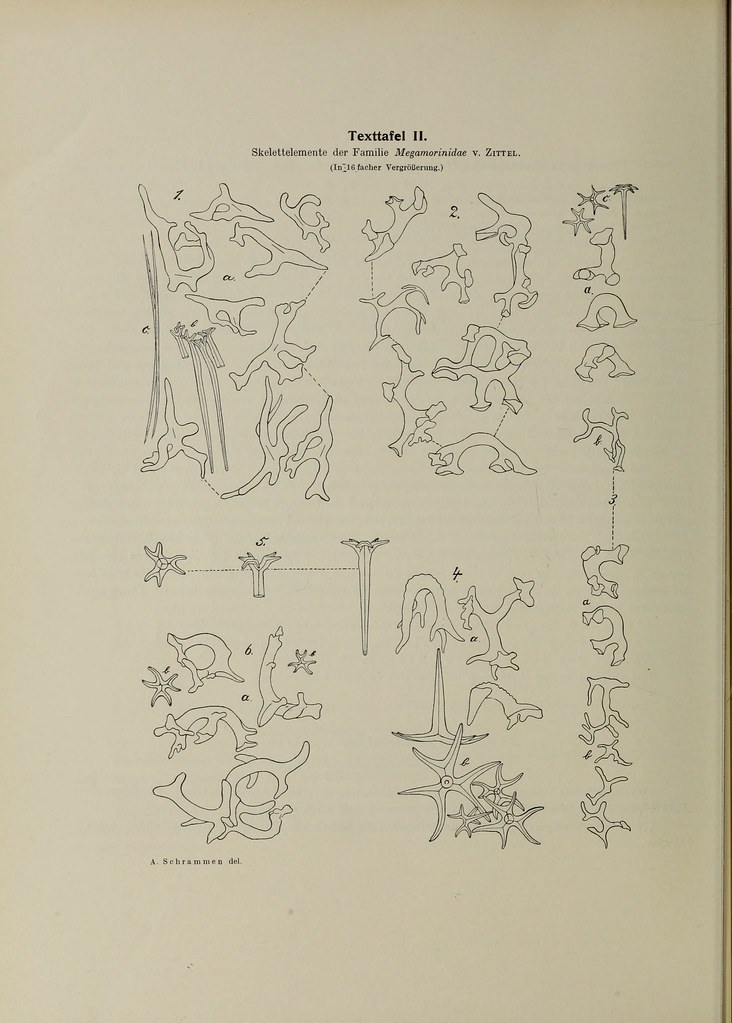
Schrammen, 1910. Die Kieselspongien der oberen Kreide von Nordwestdeutschland. I. Teil: Tetraxonia, Monaxonia und Silicea incert. sedis.


- Schrammen, 1903. Zur Systematik der Kieselspongien
- Schrammen, 1912. Ergebnisse meiner Bearbeitung der kretazischen Kieselspongien von Nordwestdeutschland
-
Hinde, 1883. Catalogue of the fossil sponges in the Geological Department of the British Museum (Natural History)


- Počta, 1885. Die versteinerten Schwämme der böhmischen Kreideformation
- Počta, 1903b. Příspěvky k poznáni vápenitých hub z křidového útvaru [Beiträge zur Kenntnis der Kalkschwämme aus der Kreideformation]
- Počta, 1903a. O některých nových houbách z křidového útvaru [Über einige neue Schwämme der Kreideformation]
-
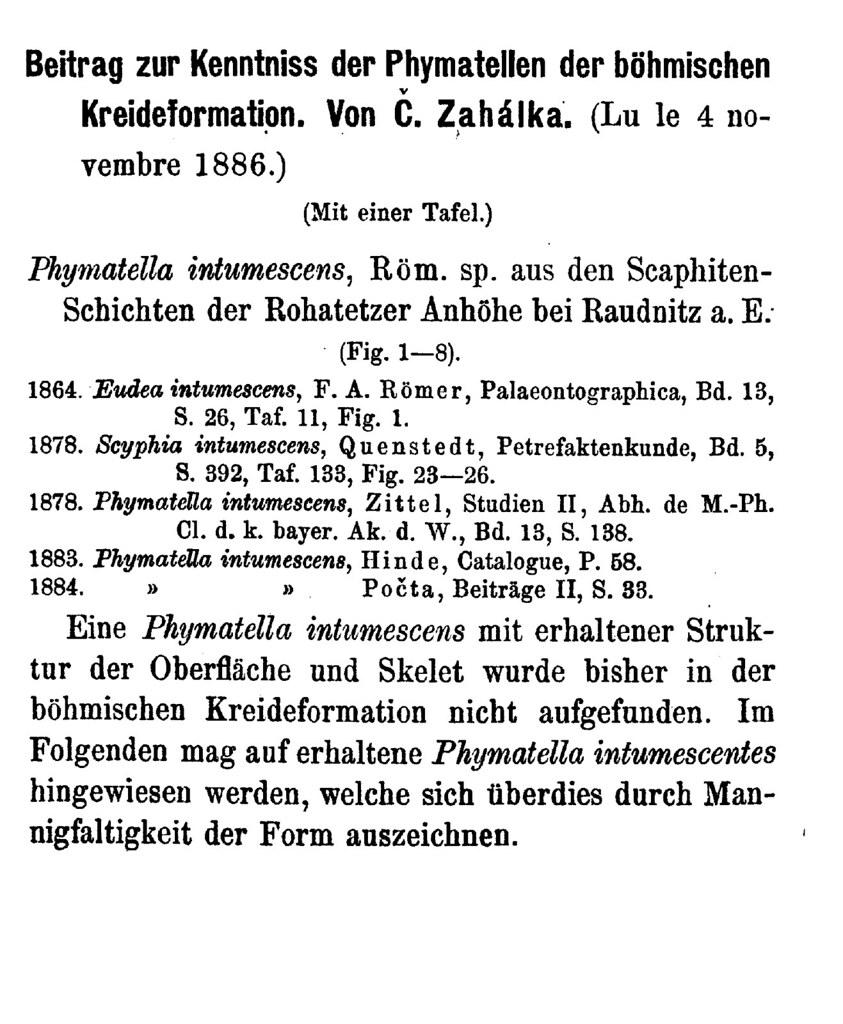
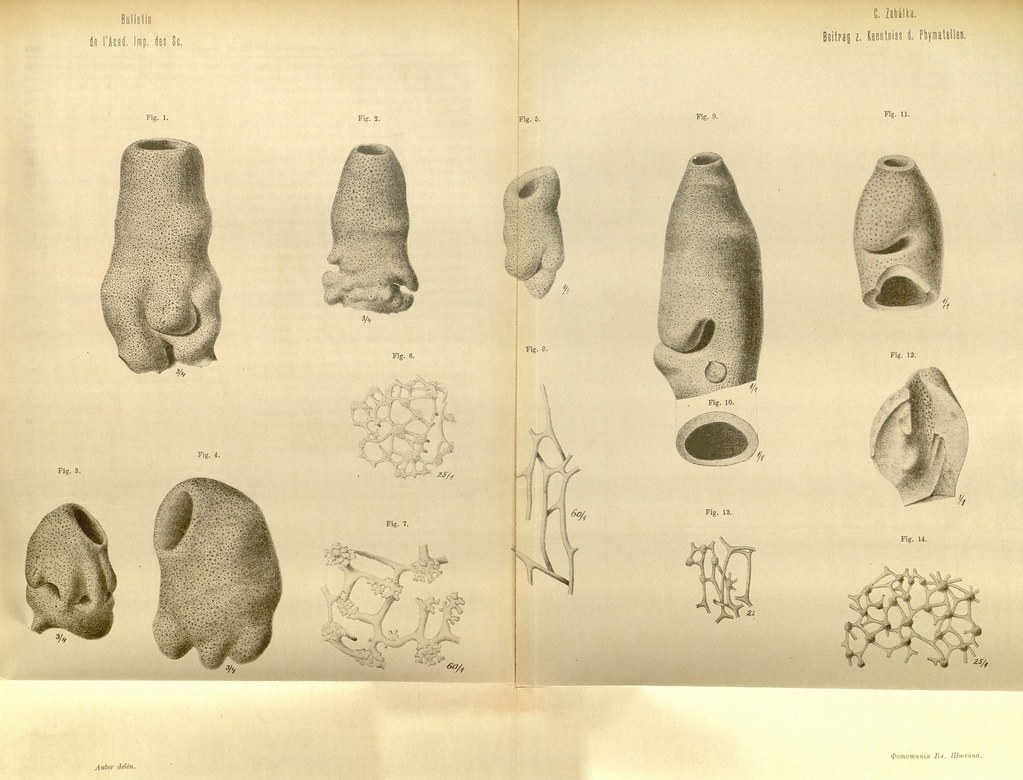
Zahálka, 1887. Beitrag zur Kenntniss der Phymatellen der böhmischen Kreideformation


- Zahálka, 1889. Camerospongia monostoma, Röm. sp. z českého útvaru křidového
-
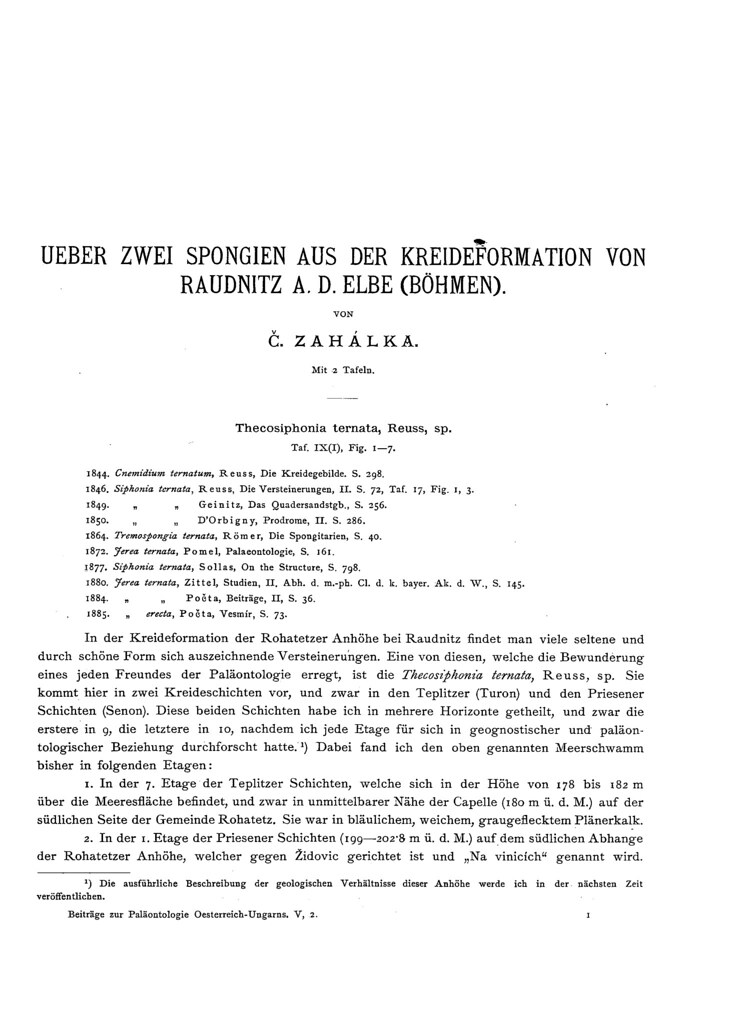
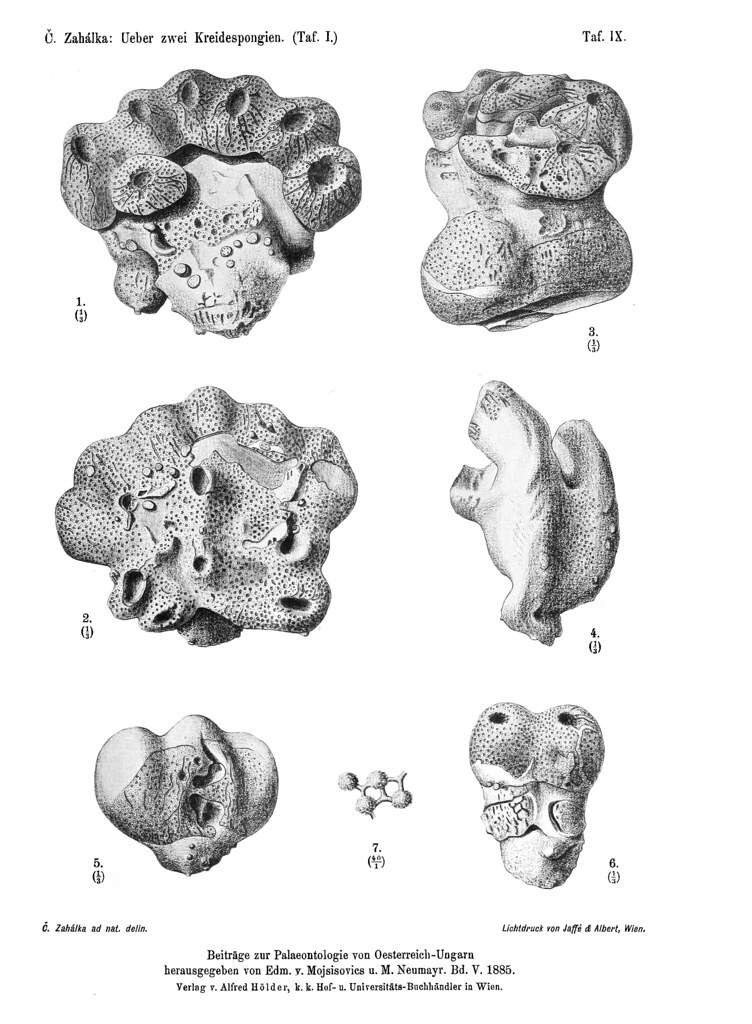
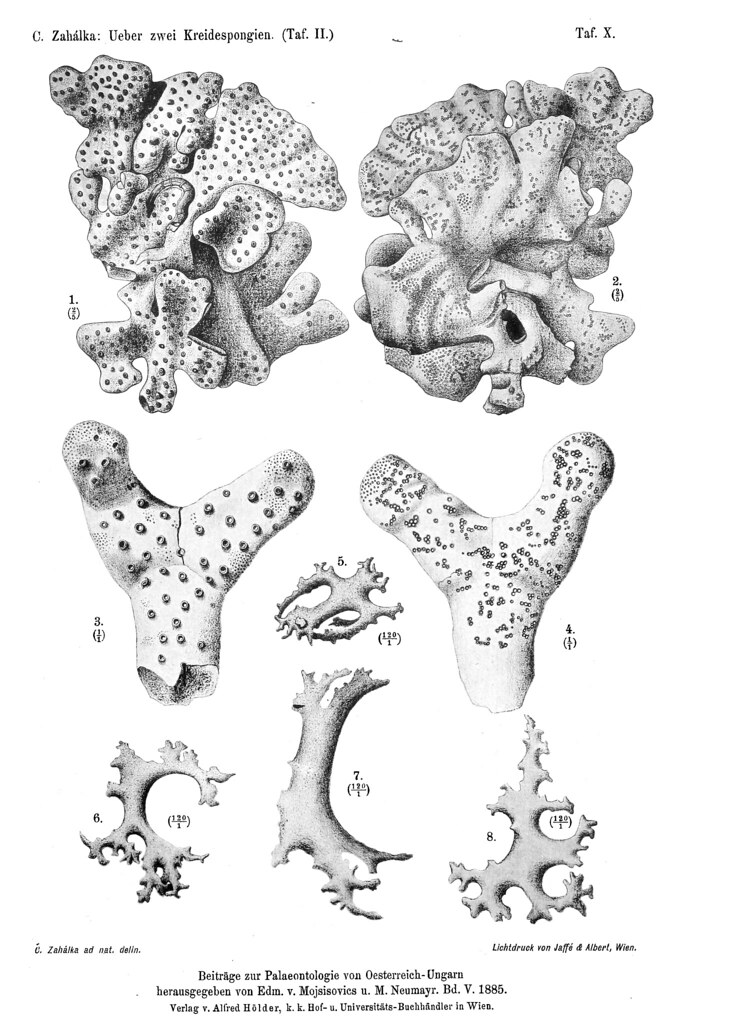
Zahálka, 1887. Ueber zwei Spongien aus der Kreideformation von Raudnitz a.d. Elbe (Böhmen)






additional Info
no remarks yet
Sources
Downloads
No e-book/PDF provided here - check Sources for downloading.
- PDF: "O`Connell, 1919. The Schrammen Collection of Cretaceous Silicispongiae in the American Museum of Natural History"
- Export to BiBTeX


Beim Nutzen des Hilfsdienst https://xyz2bbox.kreidefossilien.de bin ich auf das Problem gestoßen,… vor 10 Monaten
Blatt 42 (4840) Borna ist leider nicht korrekt verlinkt. vor 1 Jahr, 1 Monat
Der Kockelsbergtunnel wird südlich wieder in die Strecke Berlin-Dresden einbinden, nicht auf… vor 2 Jahren, 3 Monaten
Sehr schöne Anleitung, danke! vor 3 Jahren, 2 Monaten
Digitalisat von Tafel II aus Schulze, 1770 in guter Qualität hinzugefügt. Quelle: https://books.google.de/books?id=nHJlAAAAcAAJ&pg=PA37 vor 4 Jahren